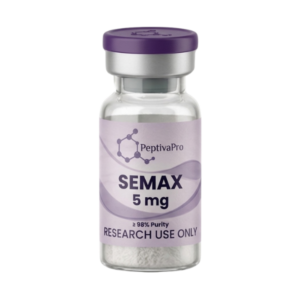
Semax is an ACTH(4-7)-derived peptide studied mainly in Russian neurobiology and stroke literature. Claims about focus, stress elimination or broad neuroprotection exceed the accessible evidence.
Biological context and mechanism
Proposed pathways include neurotrophin signalling and melanocortin-related effects without the corticosteroid activity of full ACTH. Plasma BDNF is a biomarker and cannot by itself prove neuronal recovery.
Mechanistic plausibility is only the first layer of evidence. A receptor response, gene-expression change or circulating biomarker can establish biological activity in a particular system, but it does not automatically establish a meaningful organism-level outcome. Results also depend on molecular identity, formulation, exposure, model selection and the suitability of the comparator.
What the published evidence shows
A 2018 study followed 110 people after ischaemic stroke and compared rehabilitation timing and Semax exposure, reporting BDNF and functional-score associations. The publication is bilingual at abstract level but the design is not equivalent to a modern, independently replicated pivotal trial.
This article links 1 directly relevant publication. Each source should be read in full before designing follow-up work: the abstract alone may omit allocation methods, exclusions, assay validation, attrition, multiplicity adjustments and funding disclosures that materially affect interpretation.
Evidence strength and unanswered questions
Stroke rehabilitation findings cannot support use for concentration in healthy people. Concomitant rehabilitation, allocation methods, regional replication and limited accessible English details constrain interpretation.
Evidence should be graded by model and study design. In-vitro and ex-vivo experiments are best for mechanism; animal models can explore integrated biology but may not translate; early human pharmacology can establish exposure or biomarker response; randomized controlled trials are needed for defined clinical outcomes. Findings from one level should not be described as though they came from another.
Research use cases
Laboratory studies may examine melanocortin-related signalling, BDNF transcription, neurotrophin release and controlled oxygen-glucose-deprivation models. Biomarker projects should pair BDNF with functional cellular endpoints and appropriate injury controls rather than treating a concentration change as proof of neuroprotection.
Recommended experimental controls
Confirm molecular identity and purity before biological work; document storage and handling; include vehicle, positive and negative controls; use biological rather than only technical replicates; randomise and blind assessments where feasible; report all prespecified outcomes; and retain raw analytical data. Concentration-response work should justify the tested range and assess cytotoxicity or assay interference.
Questions for future research
Priority questions include independent replication, reproducibility across laboratories, target engagement in human-relevant models, the relationship between biomarkers and functional endpoints, degradation products, off-target activity and the extent to which results depend on a particular formulation. Negative and null findings are as important as positive results for defining the evidence boundary.
Research perspective
The most useful conclusion is not whether a molecule is broadly “promising,” but which specific observation is supported, in which model, under what conditions, and with what uncertainty. That framing makes the literature more useful for designing rigorous next-step experiments.
Research-use notice: This article discusses published research and is not medical advice. Catalogue materials are intended only for laboratory research and are not approved for human or veterinary use.
Scientific sources
-
[1] Efficacy of Semax at different stages of ischaemic stroke
Study of 110 post-stroke patients, rehabilitation timing and BDNF.
Limited-access, regionally concentrated human evidence.