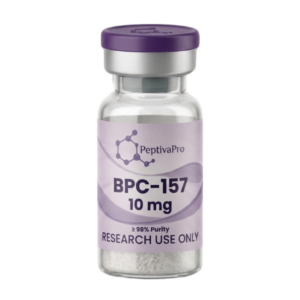
BPC-157 is a 15-amino-acid research peptide associated with a body of Croatian preclinical work. Online summaries frequently describe animal results as proven human recovery effects; the evidence does not support that leap.
Biological context and mechanism
Experiments have examined tendon fibroblast migration, survival under oxidative stress, cytoskeletal organisation and FAK–paxillin signalling. These mechanisms are hypotheses derived from model systems.
Mechanistic plausibility is only the first layer of evidence. A receptor response, gene-expression change or circulating biomarker can establish biological activity in a particular system, but it does not automatically establish a meaningful organism-level outcome. Results also depend on molecular identity, formulation, exposure, model selection and the suitability of the comparator.
What the published evidence shows
A transected rat Achilles-tendon study reported biomechanical and histological differences. Rat medial-collateral-ligament experiments and tendon-explant work reported related findings across functional and cellular endpoints.
This article links 3 directly relevant publications. Each source should be read in full before designing follow-up work: the abstract alone may omit allocation methods, exclusions, assay validation, attrition, multiplicity adjustments and funding disclosures that materially affect interpretation.
Evidence strength and unanswered questions
The cited work is predominantly from connected research groups and uses rats, explants or cultured cells. There is no adequate randomized human evidence demonstrating faster tendon, ligament or gastrointestinal healing, and no clinically validated dosing or safety framework.
Evidence should be graded by model and study design. In-vitro and ex-vivo experiments are best for mechanism; animal models can explore integrated biology but may not translate; early human pharmacology can establish exposure or biomarker response; randomized controlled trials are needed for defined clinical outcomes. Findings from one level should not be described as though they came from another.
Research use cases
Research can examine peptide stability in defined media, tendon-fibroblast migration, oxidative-stress survival, angiogenic signalling and mechanically characterised tendon or ligament models. Blinded histology, validated biomechanics, independent replication and positive controls are especially important given the concentrated source literature.
Recommended experimental controls
Confirm molecular identity and purity before biological work; document storage and handling; include vehicle, positive and negative controls; use biological rather than only technical replicates; randomise and blind assessments where feasible; report all prespecified outcomes; and retain raw analytical data. Concentration-response work should justify the tested range and assess cytotoxicity or assay interference.
Questions for future research
Priority questions include independent replication, reproducibility across laboratories, target engagement in human-relevant models, the relationship between biomarkers and functional endpoints, degradation products, off-target activity and the extent to which results depend on a particular formulation. Negative and null findings are as important as positive results for defining the evidence boundary.
Research perspective
The most useful conclusion is not whether a molecule is broadly “promising,” but which specific observation is supported, in which model, under what conditions, and with what uncertainty. That framing makes the literature more useful for designing rigorous next-step experiments.
Research-use notice: This article discusses published research and is not medical advice. Catalogue materials are intended only for laboratory research and are not approved for human or veterinary use.
Scientific sources
-
[1] BPC 157 accelerates healing of transected rat Achilles tendon
Transected Achilles-tendon model in rats.
Animal evidence only.
-
[2] BPC 157 improves ligament healing in the rat
Rat medial-collateral-ligament model.
Animal evidence only.
-
[3] BPC 157 and tendon outgrowth, cell survival and migration
Tendon explant and cultured fibroblast experiments.
Ex-vivo and in-vitro evidence.