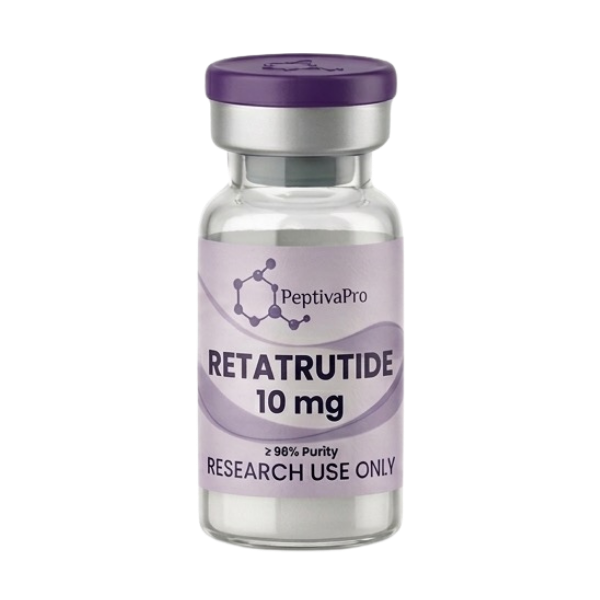
Retatrutide is supplied for laboratory research workflows that require clear product identity, careful handling, and documented specifications.
Research use only. Not for human or veterinary consumption, diagnosis, or treatment.
Weight
0.050 lbs
Quantity
10 MG, 20 MG, 30 MG
📊 Research Dosages and Protocols
Research phase
Research dosage
Administration frequency
Starting / Adaptation
2.0 mg
Once weekly
Primary / Maintenance
4.0 - 8.0 mg
Once weekly
Maximum exposure
12.0 mg
Once weekly
* Note: The listed dosages are based on reference research models and should be adapted to the specific requirements of your laboratory protocol.
🧫 Reconstitution and Storage
Reconstitution: Bacteriostatic Water (BAC Water) is recommended. Add it slowly down the side of the vial. Gently swirl the vial without shaking aggressively.
Storage (lyophilized powder): Store in a dark place at -20°C to 4°C.
Storage (reconstituted): After reconstitution, refrigerate at 2°C to 8°C and use within 20–30 days.
🔬 Clinical Study Results (TRIUMPH & TRANSCEND)
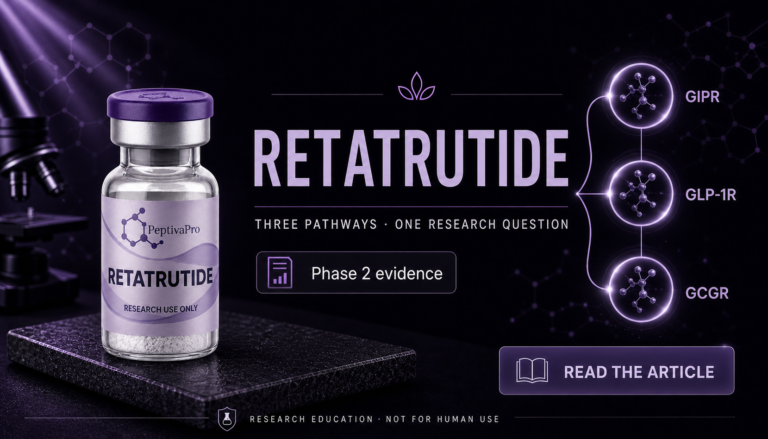
Retatrutide is an investigational triple agonist targeting GLP-1, GIP, and glucagon receptors:
Weight reduction: In phase 2 and phase 3 clinical studies, treated participants achieved approximately 24% to 28.7% weight loss over 48–68 weeks.
Liver fat (NAFLD/NASH): Studies reported liver-fat reductions of more than 80% in a substantial proportion of participants.
Mechanism: It activates three metabolic pathways associated with energy expenditure and appetite regulation.
* Sold for laboratory research and in vitro models only. The information above summarizes findings reported in published medical literature and human clinical studies.
Frequently asked questions will be added before launch.