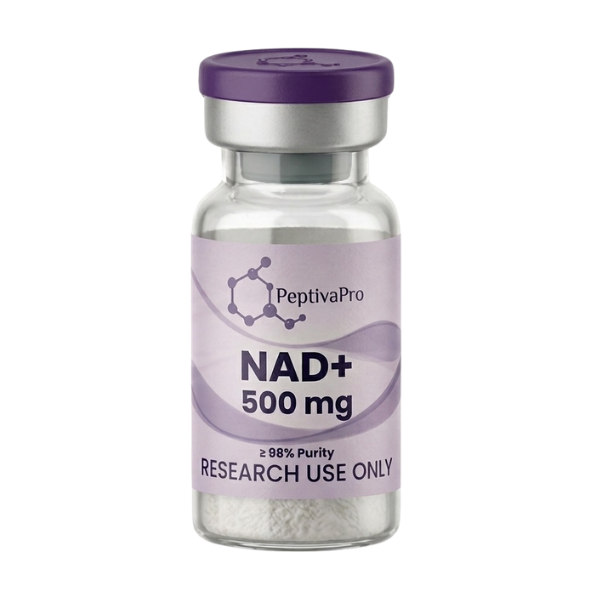
NAD+ is supplied for laboratory research workflows that require clear product identity, careful handling, and documented specifications.
Research use only. Not for human or veterinary consumption, diagnosis, or treatment.
Weight
0.050 lbs
Quantity
500 mg, 1000 mg
📊 Research Dosages and Protocols
Research phase
Research dosage
Administration frequency
Starting / Adaptation
50 mg
1-2 times weekly
Primary / Maintenance
100 - 200 mg
2-3 times weekly
Maximum exposure
500 mg
Daily (depending on the model)
* Note: The listed dosages are based on reference research models and should be adapted to the specific requirements of your laboratory protocol.
🧫 Reconstitution and Storage
Reconstitution: Bacteriostatic Water (BAC Water) is recommended. Add it slowly down the side of the vial. Gently swirl the vial without shaking aggressively.
Storage (lyophilized powder): Store in a dark place at -20°C to 4°C.
Storage (reconstituted): After reconstitution, refrigerate at 2°C to 8°C and use within 20–30 days.
🔬 Observed Research Findings
NAD+ (nicotinamide adenine dinucleotide) is a coenzyme central to cellular energy metabolism:
Cellular energy: Research links NAD+ availability with mitochondrial function and ATP production.
Metabolism: Human studies have explored effects on insulin sensitivity and healthy aging.
Neuroprotection: It is being investigated for potential protection against oxidative stress in neural cells.
* Sold for laboratory research and in vitro models only. The information above summarizes findings reported in published medical literature and human clinical studies.
Frequently asked questions will be added before launch.